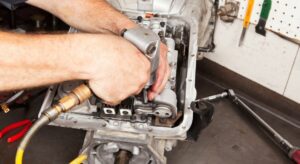
The transmission is one of the most complicated and important components of your car
Certified technician transmission
Service & Transmission Rebuilding
A rebuilt or remanufactured transmission is one where the transmission is disassembled and inspected. Worn or damaged parts are replaced (generally referred to as “hard parts”) and then reassembled to factory specifications, along with new gaskets, output shaft, valve body, seals, clutches and bands. These are commonly referred to as “soft parts.” The term “rebuilt” is generally used in a shop setting where the customer’s transmission is removed from the car, rebuilt and then reinstalled. It is a custom process performed by a specialist. Other terms you may hear that have the same meaning are “refurbished, reconditioned, or overhauled.”
After remanufactured transmissions are reassembled to factory specifications at a minimum—including aftermarket fixes for hereditary problems and known factory defects, the unit comes with installation reprogramming kits for particular valve trains to address hydraulic functions.
Benefits of Remanufactured Transmissions
A remanufactured transmission offers several benefits:
Remanufactured transmissions are built from quality parts which are thoroughly tested, ensuring they meet original equipment manufacturer (OEM) specifications and come with a specific number mile warranty.
Remanufactured transmissions are affordable when compared to new transmissions, allowing you to save money without compromising on quality.
Remanufactured Transmissions vs. Used Transmissions
Two alternatives that you can use for replacing a faulty transmission are purchasing a used transmission or purchasing a remanufactured transmission. These two are totally different. Remanufactured transmissions undergo a complete rebuilding process, replacing worn or damaged parts and reconditioning all the internal components to meet original equipment manufacturer (OEM) standards. On the other hand, a used transmission is simply a salvaged transmission that has not undergone any rebuilding or reconditioning.
Why Choose Rebuilding Over Replacement?
1. Cost Savings
Rebuilding a transmission is almost always cheaper than purchasing a new transmission or a remanufactured transmission unit—for both manual transmission and automatic transmission. The rebuilder can reuse expensive components like housings and shafts that do not require replacement, keeping material costs to a minimum. Labor charges are also usually lower for a rebuild than for a so-called “reman transmission” remanufactured transmission, either for manual transmissions or automatic.
2. Customization and Upgrades
Since rebuilds are done in-house, the rebuilder can fully inspect the internal condition, identify potential weak points and install upgraded aftermarket parts to improve durability. This also allows addressing any vehicle-specific issues. A one-size-fits-all replacement unit cannot offer this degree of customization.
3. Less Downtime
The turnaround time for a local transmission rebuild is usually much shorter than ordering and receiving a replacement unit. This reduces vehicle downtime significantly.
4. Warranty Coverage
Most rebuilders provide an 18 month to 3 year warranty on their work. This protects against the possibility of issues cropping up shortly after the rebuild. Replacement units often come with shorter 90 day warranties from suppliers.
5. Environmental Impact
Reusing a transmission case and salvageable hard parts is better for the environment than scrapping an entire unit. Rebuilding’s lower carbon footprint aligns with environmental priorities.
The Transmission Rebuilding Process Explained
Step 1: Removal and Disassembly
The transmission is removed from the vehicle—both gasoline and diesel vehicles—and completely disassembled piece by piece. Each component is thoroughly cleaned to remove all traces of old fluid and debris. The shop may take photos during disassembly to aid with the rebuilding process. Proper storage, organizing and labeling of parts is critical.
Step 2: Inspection and Analysis
Every single component is closely inspected for wear, damage or other issues that would impair performance. Measurements are taken and compared to factory specifications to identify any out-of-spec parts. The shop determines which parts can be salvaged and what needs replacing.
Step 3: Parts Replacement
Based on the inspection, worn and damaged parts, such as bands, torque converter, clutches, seals and gaskets are discarded and replaced with new OEM spec parts. Certain critical components—such as shafts and housings—are reconditioned and remachined if possible rather than being replaced. Upgraded aftermarket parts may also be installed.
Step 4: Cleaning and Prep
All salvaged parts are thoroughly cleaned again before reassembly begins. Surface areas, fluid passages and component mating surfaces are carefully prepared—often by specialist techniques like high pressure washing. The transmission case receives expert cleaning and prep work inside and out.
Step 5: Reassembly
Using the disassembly photos as reference, the transmission is carefully reassembled to factory specs or better. All components must be installed in the proper sequence and aligned precisely. Upgraded friction materials, improved seals and superior fasteners often feature in the rebuild.
Step 6: Testing
On completion, the rebuilt transmissions undergo comprehensive operational testing on a dynamometer to confirm smooth gear shifts, pressure integrity, proper lubrication flow and full functionality. Further adjustments may happen to achieve OEM+ performance.
Step 7: Delivery
Finally, the rebuilt transmission is delivered back to the customer or installer for reinstallation into the vehicle, along with a warranty on workmanship.
Home of Quality Reconditioned Transmissions
The transmission is an incredibly valuable and complex component. Rebuilding rather than replacing at the first sign of problems empowers you to protect the investment you’ve made in your vehicle. Opting to have your transmission expertly rebuilt by our certified shop extends the service life of your original transmission, delivers upgraded performance and longevity, and saves you thousands over replacement costs—quite a triple play.
By now it should be clear that rebuilding a compromised transmission through timely intervention makes good economic sense while also being far less disruptive than transmission replacement. Expert assessment, precise remanufacturing techniques and quality-focused processes further ensure you get back a smooth-shifting transmission tailored to your vehicle with upgraded parts where needed. This complete and diligent rebuild process checks all the right boxes when it comes to performance, longevity and return on investment.
Still unsure if a rebuild is your best bet? Connect with our transmission specialists to have an honest conversation about your options, ensuring you get a compatible transmission for your vehicle. We want you to feel 100% confident as we work together to maximize the service life of your original transmission and get you back on the road worry-free. We have both remanufactured automatic transmissions and remanufactured manual transmissions in stock, ensuring that you find what you are looking for. Rebuilding transmissions is our passion and specialized expertise. We recondition the entire transmission assembly from the inside out to our strict specifications. Trust us to care for your transmission as the precision-engineered marvel it is.
ContactUs So wecan diagnose your problem
Your Automotive Repair &
Maintenance Service Specialist
Outstanding! Not enough words to describe the level of commitment & expertise Jody Wierenga brings to the shop. His professionalism, knowledge, honesty, and responsiveness exceed all expectations. I could not be happier with my experience at O’Neill’s, and I guarantee you will be, too. Thank you for all the hard work you did on my vehicle, Jody!
Jeff C. - Grand Rapids, MI
I have complete trust in O’Neill’s. Twice this year I have had major repairs done on my two Honda Odyssey mini-vans. One van needed a tranny replacement, and the other van needed a lot of front-end work. Both times I have found all of the guys – front office and techs – to be very considerate and honest, especially this last time when they could have easily recommended a couple thousand more in repairs but explained that the fears I had were not warranted. The struts were fine for quite a few more miles, and it was not time to work on the tranny on this one. Another shop in town had recommended these repairs when I had some tire work done… I knew I could trust O’Neill’s and am glad I can. Both vans run beautifully, and I know they are in good hands for any future needs.
Allen H. - Ada, MI
Wow! Needed a new transmission. They installed a re-manufactured unit — and to boot replaced the water filter, serpentine belt, and another belt without any additional charge! I have never experienced that before!
Gary F. - Caledonia, MI
They do what needs to be done! It is always a pleasure doing business with the O’Neill family.
Barry K. - Jenison, MI
The service was explained clearly, done promptly, and at a fair price.
Carrie W. - Lowell, MI
Great customer service and saved me a bunch of money! I was so pleased with the service I received. Tedd kept me aware of what was going on and got my car in quickly for needed service. Shaun diagnosed the problem quickly and found a way to fix it without having to buy an entire harness ($600 + labor). The total bill was under $300. !t was a great experience and I will return the next time I need something done. I was glad to hear that they provide more than just transmission repairs!
Brooke W.
O’Neill’s Transmission Service was patient with all of my questions. They kept me informed and called to ask for my permission to complete a new task. They completed the job quickly and skillfully, all at a fair price!
Tom M. - Grand Rapids, MI
You just can’t beat the service and honesty – A job well done, honest friendly service, by a very knowledgeable staff. No other place in town, truly.