5 cold-weather transmission warning signs
Cold mornings can temporarily change shift feel, but repeated or worsening symptoms deserve attention.
- 01Delayed shifting into drive, reverse, or the next gear
- 02Hard, rough, or jerky gear changes
- 03Slipping gears or rising RPMs without matching acceleration
- 04New whining, humming, clunking, or grinding noises
- 05Transmission fluid leaks that become more noticeable in winter
Have a Question About This Article?
Ask about anything covered in this guide. We’ll find the most relevant information in the article.
When the temperature drops, your vehicle has to work harder in ways many drivers do not expect. Cold weather can affect how transmission fluid flows, how smoothly your vehicle shifts, and how quickly existing wear starts to show up as a real problem.
That does not always mean something is seriously wrong. Some changes in how your car feels on a cold morning can be normal. But when hesitation, hard shifting, slipping, or unusual noises keep happening, it may be time to have your transmission inspected before winter driving makes the issue worse.
Why Cold Weather Can Affect Your Transmission
Your transmission depends on fluid, pressure, and precise movement to shift properly. In colder temperatures, transmission fluid thickens before the vehicle fully warms up. That thicker fluid may not circulate as easily right away, which can lead to rougher shifting, hesitation, or delayed engagement.
Cold weather also tends to make small issues more obvious. A transmission that already has worn components, aging seals, old fluid, or internal damage may struggle much more when temperatures fall. That is why many drivers first notice a problem at the start of winter.
01. Delayed Shifting After You Start the Vehicle
One of the most common cold weather transmission problems is delayed shifting. You start the vehicle, put it in gear, and it takes longer than usual to respond. Or you begin driving and notice the transmission seems slow to shift from one gear to the next.
In some cases, a brief delay on a very cold morning can happen because the fluid needs a little time to warm up. But if the delay is frequent, gets worse, or happens even after driving for a while, it may point to low fluid, dirty fluid, internal wear, or a pressure-related issue.
Warning signs to pay attention to
- Hesitation when shifting into drive or reverse
- A pause before the vehicle starts moving
- Sluggish gear changes during the first several minutes of driving
02. Hard or Rough Shifting in Cold Weather
If your vehicle feels like it is lurching, jerking, or shifting aggressively when it is cold outside, that is another sign your transmission may need attention. Drivers often describe this as the car “slamming” into gear or shifting harder than normal.
Cold temperatures can make fluid move less efficiently at startup, but rough shifting should still improve as the vehicle warms. If it does not, or if it is getting more noticeable each winter, there may be a deeper mechanical or fluid-related problem.
Hard shifting can be linked to
- Old or contaminated transmission fluid
- Low fluid levels
- Worn transmission components
- Sensor or control issues
- Problems with pressure inside the transmission
Related reading: If the main symptom is a jolt during gear changes, read why your car jerks when shifting for a closer look at possible causes.
03. Slipping Gears While Driving
Transmission slipping is never something to ignore. This happens when your vehicle changes gears unexpectedly, struggles to stay in gear, or revs higher without delivering the power you expect. In colder weather, these symptoms may seem more obvious, especially during acceleration.
Drivers sometimes notice the engine revving but the vehicle not moving the way it should. Others feel the car “catch” late or shift inconsistently. Cold weather does not cause healthy transmissions to slip, but it can expose existing problems faster.
If your transmission is slipping, it could mean
- The fluid is low or breaking down
- Internal components are worn
- There is an issue with pressure or engagement
- The transmission needs professional attention before damage spreads
04. Unusual Noises When the Vehicle Is Cold
Whining, humming, clunking, or grinding sounds can all be warning signs. Some drivers only hear these noises during the first few minutes of driving on cold mornings, while others begin to notice them more consistently once winter begins.
Any new or worsening sound deserves attention, especially if it happens together with shifting problems. Noises may indicate fluid circulation problems, internal wear, loose parts, or mounting issues that become more noticeable in colder temperatures.
Pay close attention if you hear
- Whining while accelerating
- Clunking during shifts
- Grinding or vibration when changing gears
- Sounds that continue after the vehicle warms up
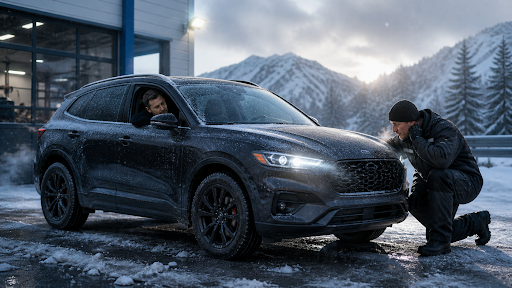
05. Transmission Fluid Leaks Get Worse in Winter
Cold weather can make aging seals and gaskets more vulnerable. Materials contract when temperatures drop, and that can sometimes make small leaks more obvious. If your transmission is already losing fluid, winter conditions may make the problem easier to notice.
Transmission fluid is critical to lubrication, cooling, and hydraulic pressure. Even a small leak can turn into a larger repair issue if it causes the fluid level to drop too far.
You may have a leak if you notice
- Red or dark fluid under the vehicle
- A burning smell
- Slipping or delayed shifting
- Fluid levels dropping between visits
What Is Normal in Cold Weather and What Is Not?
A lot of drivers ask whether it is normal for a transmission to feel different on a cold morning. The answer is yes, to a point. A brief period of slightly firmer shifting or slower response can happen when temperatures are very low.
What is not normal is when the symptoms are severe, frequent, or do not go away after the vehicle warms up. That is when it is smart to stop guessing and have the transmission checked.
A professional inspection is a good idea when
- Rough shifting continues after warming up
- The transmission slips or hesitates often
- Warning lights come on
- You notice leaking fluid
- Noises are becoming more frequent
- The vehicle struggles more each time temperatures drop
What You Can Do Before Winter Gets Worse
If you want to protect your transmission before cold weather puts more stress on it, a few simple steps can help.
First, do not ignore early symptoms. Small problems are usually easier and less expensive to fix than major internal damage. Second, stay on top of transmission fluid maintenance based on your vehicle’s needs. Old or dirty fluid can make cold-weather performance worse. Third, give your vehicle a little time to settle before driving aggressively on freezing mornings.
It also helps to schedule an inspection if your vehicle has been shifting differently, especially before winter travel and colder temperatures arrive in full force.
When to Schedule a Transmission Inspection
If your car is not shifting smoothly, is taking longer to engage, or feels worse every time the temperature drops, it is better to have it inspected sooner rather than later. Waiting can allow a fluid issue, leak, or worn part to turn into a larger repair.
A transmission inspection can help identify whether the issue is minor, maintenance-related, or something that needs more immediate attention. Catching the problem early may help you avoid a breakdown during the coldest part of the season.
Stay Ahead of Cold Weather Transmission Problems
Winter can be hard on your vehicle, and your transmission is no exception. If you are noticing delayed shifting, rough gear changes, slipping, leaks, or unusual noises, those may be signs your transmission needs attention before the season gets worse.
A small issue today can become a bigger repair later. If your vehicle has started acting differently in cold weather, schedule a transmission inspection and get ahead of the problem before winter driving puts even more strain on your car.
Cold Weather Exposing a Transmission Problem?
Don't wait for a small shifting issue to become a winter breakdown. O'Neill's Auto & Transmission Service can help you determine what your automatic transmission needs.
Visit O'Neill's TransmissionFrequently Asked Questions
Straight answers to common cold-weather transmission concerns.
Can cold weather cause transmission problems?
Cold weather can make existing transmission issues more noticeable and can affect how fluid flows during startup. It may not create major damage by itself, but it can reveal problems that were already developing.
Is it normal for a transmission to shift hard when cold?
Slightly firmer shifting for a short time on a very cold morning can happen. Ongoing hard shifting, slipping, or hesitation is not something you should ignore.
Why is my transmission not shifting right in cold weather?
Common reasons include thickened fluid during startup, old or low transmission fluid, worn internal parts, or pressure-related issues. A proper inspection can determine the exact cause.
Should I drive if my transmission is slipping in cold weather?
It is best to have it checked as soon as possible. Slipping is a warning sign that should not be ignored, especially if it happens more than once. If the vehicle cannot accelerate or engage reliably, stop driving in a safe location and arrange assistance.